Gain Confidence With a Refined Nose by Seeking Ethnic Rhinoplasty in Newport Beach, CA

Expertise in Ethnic Rhinoplasty Techniques
At Dr. Shabnam Ghazizadeh, MD Facial Plastic Surgery, we recognize that every nose tells a story. For many patients, the goal of rhinoplasty is not to erase their heritage but to enhance their natural features while preserving cultural identity. Ethnic rhinoplasty is a specialized approach that respects diverse facial structures, whether Middle Eastern, Asian, African, or Latin, to achieve refined, balanced, and authentic results.
As the only board-certified facial plastic surgeon in Newport Beach, Dr. Ghazizadeh has extensive experience in ethnic rhinoplasty. Her philosophy combines surgical precision with artistry, ensuring that each procedure enhances the nose while harmonizing with the patient’s overall facial features. Patients travel from across Orange County and beyond to benefit from her tailored, culturally sensitive approach to nasal surgery.

What Is Ethnic Rhinoplasty?
Ethnic rhinoplasty is a form of nose surgery designed specifically for patients of diverse backgrounds who seek aesthetic improvement without compromising their unique heritage. Unlike traditional rhinoplasty, which may follow standardized ideals of nasal shape, ethnic rhinoplasty considers distinct structural characteristics such as thicker skin, wider nasal bases, low nasal bridges, or softer cartilage.
The goal is not to create a “one-size-fits-all” result but to refine the nose in a way that looks natural for the patient’s heritage. Whether reducing a dorsal hump, narrowing nostrils, or enhancing nasal tip definition, ethnic rhinoplasty is about balance and authenticity rather than uniformity.
How Does Ethnic Rhinoplasty Work?
Ethnic rhinoplasty requires advanced surgical techniques and an understanding of unique anatomical variations. Dr. Ghazizadeh begins with a comprehensive consultation to learn about the patient’s goals and aesthetic preferences. She then evaluates nasal anatomy, skin thickness, cartilage strength, and facial proportions.
During surgery, small, discreet incisions are made either inside the nose (closed rhinoplasty) or along the columella between the nostrils (open rhinoplasty). Depending on the patient’s needs, techniques may include cartilage reshaping, nasal tip refinement, bridge augmentation, or nostril adjustment. Cartilage grafts, often taken from the septum or ear, may be used to provide structure and long-term stability.
Every surgical plan is customized to the individual, ensuring results that enhance facial harmony while preserving cultural features. The procedure is performed under anesthesia for patient comfort and typically takes several hours.
Benefits of Ethnic Rhinoplasty
Patients choose ethnic rhinoplasty in Newport Beach, CA, for its ability to achieve natural, culturally respectful improvements. Benefits include:
Refinement of nasal shape while maintaining ethnic identity
Improved facial balance and symmetry
Reduction of nasal width, hump, or bulbous tip when desired
Enhanced definition of the nasal bridge or tip for a stronger facial profile
Boosted self-confidence without looking surgically altered
Customized techniques that respect unique anatomical structures
Why Choose Dr. Ghazizadeh Facial Plastic Surgery?
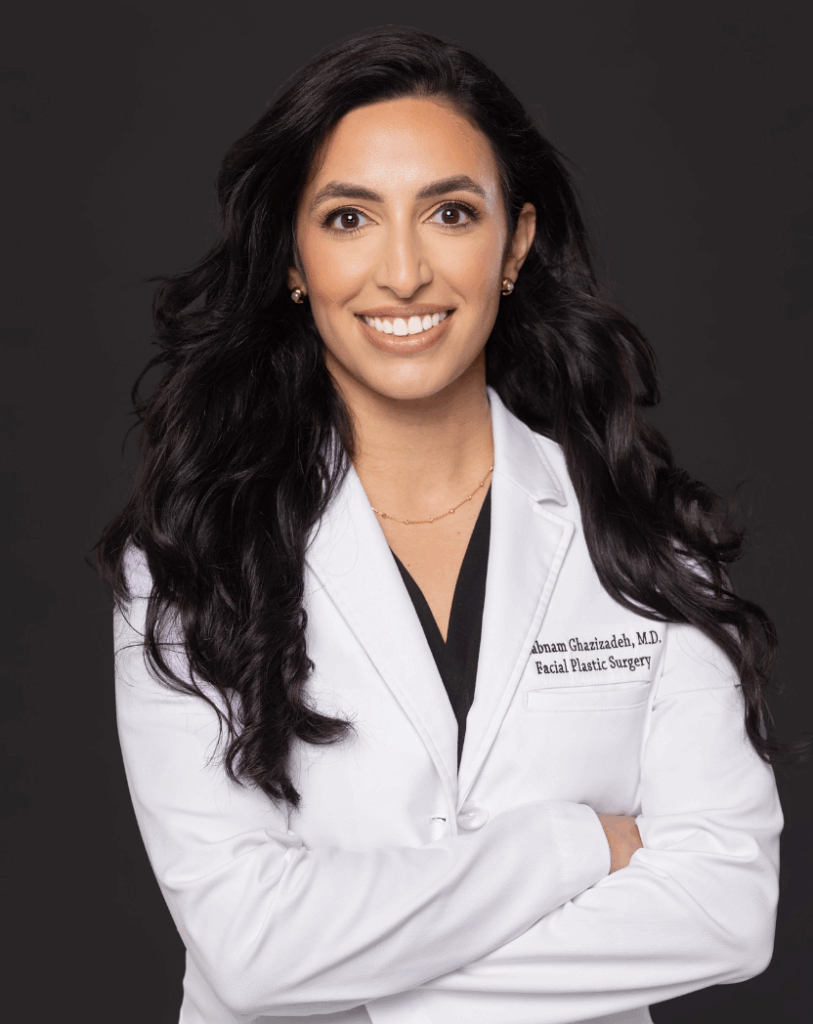
As Newport Beach’s only board-certified facial plastic surgeon, Dr. Ghazizadeh is uniquely qualified to perform ethnic rhinoplasty. She has trained extensively in advanced nasal surgery and is deeply committed to providing individualized, culturally sensitive care.
Her approach is centered on preserving identity while refining features. Every patient receives a personalized surgical plan developed after an in-depth consultation. Dr. Ghazizadeh’s balance of technical expertise and artistic vision ensures that results look natural and harmonious.
Is Ethnic Rhinoplasty Right for You?
Ethnic rhinoplasty may be ideal if you:
- Desire nasal refinement without losing your cultural identity
- Struggle with a dorsal hump, wide nasal base, or bulbous tip
- Have asymmetry that disrupts facial balance
- Want to improve breathing while enhancing appearance
- Seek natural results that reflect your heritage
Candidates are typically in good overall health, non-smokers, and have realistic expectations about surgical outcomes. During your consultation, Dr. Ghazizadeh will carefully evaluate your anatomy and help you determine if ethnic rhinoplasty is the right choice.


The Ethnic Rhinoplasty Process
Consultation and Planning
Your journey begins with a detailed consultation where Dr. Ghazizadeh listens to your concerns, reviews your medical history, and performs a full nasal evaluation. She takes the time to understand your cultural background and personal goals before developing a surgical plan that aligns with your vision.
Your journey begins with an in-depth consultation. Dr. Ghazizadeh listens to your concerns, reviews your medical history, and examines your facial structure. Using her expertise, she designs a personalized surgical plan that aligns with your goals while maintaining balance with your natural features.
The Procedure
On the day of surgery, anesthesia is administered for comfort. A discreet incision is made beneath the nose, and a section of skin is removed. The underlying deep tissues are then lifted and repositioned in the subfascial plane, allowing the lip to be elevated without tension. Once the desired shape and proportion are achieved, the incision is closed with meticulous technique to minimize visible scarring.
Recovery
After surgery, patients typically experience swelling, bruising, and congestion during the first week. Most return to work or school within 7 to 10 days. Swelling continues to improve over several months, with final results gradually revealed as tissues settle. Dr. Ghazizadeh provides detailed aftercare instructions and follow-up appointments to ensure smooth healing.
Ethnic Rhinoplasty Recovery Timeline
- Week 1: Swelling, bruising, and nasal congestion are most noticeable. A splint is typically removed after one week.
- Weeks 2–3: Bruising fades significantly, and patients can resume light activities.
- Months 1–3: Swelling continues to diminish, and nasal shape becomes more refined.
- Months 6–12: Final results emerge, with subtle improvements in contour and definition.
Frequently Asked Questions
How is ethnic rhinoplasty different from traditional rhinoplasty?
Ethnic rhinoplasty accounts for unique anatomical structures such as thicker skin, wider nostrils, and softer cartilage. It focuses on refinement rather than creating a standardized nose.
Will ethnic rhinoplasty change my identity?
No. The goal is to enhance natural features while preserving cultural heritage. Results should look like a more refined version of you, not someone else.
How long do results last?
Rhinoplasty results are long-lasting. While aging continues, the structural improvements remain permanent.
Will I have visible scars?
Incisions are discreetly placed inside the nose or along the columella, where they are barely noticeable after healing.
Can ethnic rhinoplasty improve breathing?
Yes. Functional concerns such as a deviated septum or collapsed nasal valves can be addressed during surgery to improve airflow.
