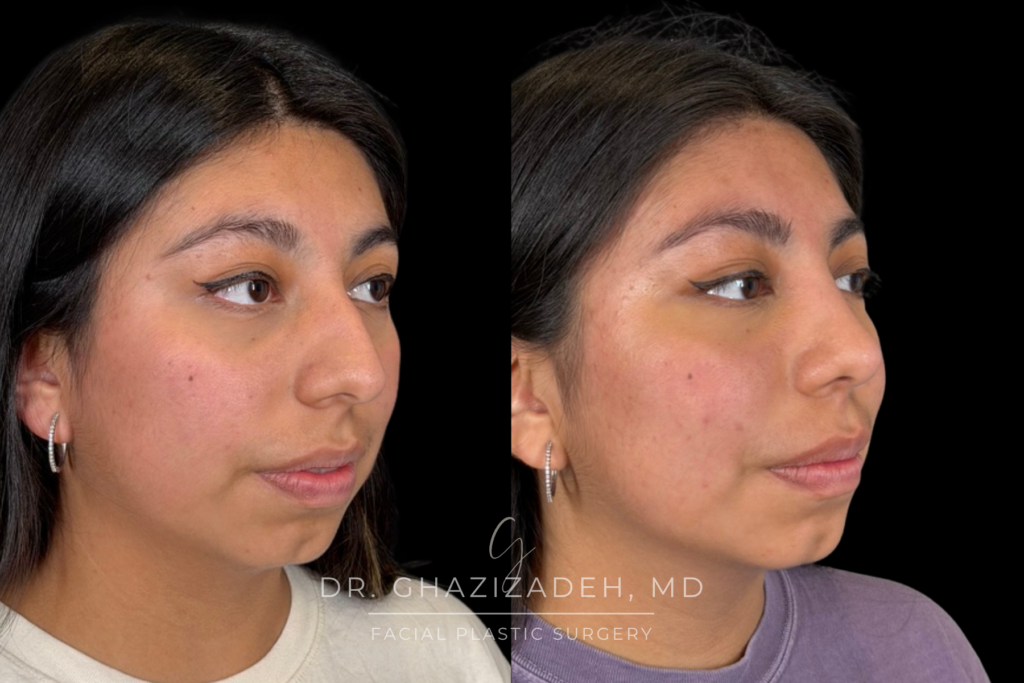
The base of the nose is a small area with an outsized influence on how the whole face reads. When the nostrils flare widely, sit asymmetrically, or appear broad in relation to the eyes and lips, the effect can draw attention to the center of the face even when the bridge and tip are already well proportioned. Many people who notice this feel that a full rhinoplasty would change far more than they want to change. For these patients in Newport Beach and across OC, alarplasty offers a focused way to refine the nasal base while keeping the character of the nose, and the face, intact.
At Dr. Ghazizadeh Facial Plastic Surgery, we see nostril reduction as a procedure of restraint. Dr. Shabnam Ghazizadeh, a double board-certified, fellowship-trained facial plastic surgeon, approaches the nasal base with careful measurement and a clear respect for the features a patient has inherited. For many of the people we meet, the width and shape of the nostrils are part of a family resemblance or a cultural heritage they value. Our goal is never to replace that identity with a generic ideal; it is to bring the nasal base into quieter harmony with the rest of the face.
What Alarplasty Is and How It Differs From Rhinoplasty
Alarplasty, also called alar base reduction or nostril reduction surgery, reshapes the alae, which are the curved, fleshy sides of the nostrils, and the point where they meet the cheek. The procedure may reduce the overall width of the nasal base, soften excess flaring, decrease the size of the nostril openings, or improve symmetry between the two sides. Unlike a full rhinoplasty, alarplasty does not typically alter the nasal bones, the bridge, or the tip cartilage. It works only at the base, which is why recovery is generally shorter and why the change can feel subtle to others even when it is meaningful to the patient.
Surgeons generally describe three basic patterns of tissue removal. Cerkes, writing in Clinics in Plastic Surgery in 2022, outlined them as the alar wedge excision, placed in the crease where the nostril meets the cheek to reduce flaring and the size of the alar lobule; the nostril sill excision, which narrows the distance between the nostrils and reduces the size of the openings; and a combined excision for patients who have both a wide base and pronounced flare. The same review emphasized that the columellar base, the narrow column between the nostrils, should be evaluated before any alar resection, because the nasal base functions as a connected unit.
Alarplasty may be performed on its own or alongside a rhinoplasty in Newport Beach when a patient also wishes to address the bridge, the tip, or breathing. When the procedures are combined, the nasal base is usually refined last, once the tip position has been set, so that the final width is judged against the new proportions of the nose rather than the old ones. Dr. Ghazizadeh discusses this sequencing during consultation so that patients understand how each step contributes to the final balance.
Common Concerns That Bring Patients to Nostril Reduction
The reasons patients seek alarplasty are personal and varied. Some notice that their nostrils widen noticeably when they smile, which can make the nose appear larger in photographs than it does at rest. Others have nostrils of different sizes or shapes, sometimes from birth and sometimes from a prior injury or earlier nasal surgery. A third group has already had rhinoplasty and found that a narrower bridge or a refined tip made the existing base look wider by comparison. In each case, the concern is usually about proportion rather than size alone.
Cultural and Ethnic Identity
Nasal base width varies naturally across ancestries, and a nose that is well proportioned for one face may not be appropriate for another. Patients of Middle Eastern, Asian, African, Latin, and mixed heritage often tell us they want refinement without looking as though their background has been edited out. That concern is legitimate and, in our view, central to good planning. Reid and colleagues, in a 2025 systematic review published in Aesthetic Plastic Surgery, concluded that culturally attuned techniques and attention to preserving ethnic characteristics are essential to successful rhinoplasty outcomes in diverse populations, and that tailoring the approach to anatomy and aesthetic goals supports both satisfaction and clinical results.
For this reason, Dr. Ghazizadeh does not aim for a single target width. A modest reduction that keeps the nasal base in proportion with the patient’s lips, cheeks, and intercanthal distance often looks far more natural than an aggressive narrowing that conflicts with surrounding features. Patients who are also considering broader changes may find our ethnic rhinoplasty page helpful, as it describes how we balance refinement with heritage across the entire nose.
Concerns About Scarring and Function
Two practical questions come up in nearly every consultation: will the scar show, and will breathing change? Incisions for alarplasty are placed in the natural alar-facial groove or along the inner nostril sill, where they tend to blend with existing shadows. Hudise and colleagues, reporting in the Journal of Oral and Maxillofacial Surgery in 2020, followed 70 patients after alar base reduction and found that roughly 83 to 86 percent described their scars as unnoticeable, with the remainder describing them as noticeable but acceptable; the authors noted that placing the incision within the groove helped conceal it, particularly in patients with a deep facial groove. Because overly aggressive reduction can narrow the nostril opening, Dr. Ghazizadeh measures conservatively and considers airflow alongside appearance.
Our Signature Approach to Nasal Base Refinement
Our surgical team uses what we call our Signature Nasal Balance approach, a planning process built around the idea that the nasal base should be judged within the context of the entire face. It begins with a detailed consultation in which Dr. Ghazizadeh reviews your goals, examines the nose from the front, side, and base views, and evaluates how the nostrils move when you smile and speak. Using digital photographs and image-altering software, she can show how different degrees of reduction may affect your overall balance, which helps patients see the difference between refinement and overcorrection before any decision is made.
Choosing the Right Technique
The technique is selected according to the specific pattern of the nasal base rather than applied uniformly. Patients whose main concern is flaring on the front view are often suited to a conservative alar wedge excision. Those with a wide nasal base and large nostril openings may benefit from a sill excision, while patients who have both features may need a combined design. Asymmetry is addressed side by side, sometimes removing slightly different amounts of tissue from each nostril so that the result reads as balanced. Every measurement is planned in millimeters, because small adjustments at the nasal base produce visible differences.
Combining Alarplasty With Other Procedures
Some patients benefit from addressing more than the nasal base. When the bridge or tip also needs refinement, alarplasty may be combined with Piezo Ultrasonic Rhinoplasty, which uses ultrasonic instruments to sculpt bone with precision. In other cases, a weak chin can make the nose appear larger than it is, and chin augmentation may be discussed as part of an overall facial-balancing plan. Our team will only recommend combined procedures when they serve your stated goals.
Candidacy and When to Wait
Good candidates for alarplasty are in good general health, do not smoke or are willing to stop well before surgery, and have specific concerns about nostril width, flare, or symmetry with realistic expectations about the degree of change. Patients who have had prior nasal surgery are typically advised to wait until earlier swelling has fully resolved, which may take a year or longer, so that the nasal base can be assessed accurately. Alarplasty may not be advisable for people with active skin infections near the nose, uncontrolled medical conditions, or a history of poor wound healing, and those prone to thickened or raised scars should discuss that history in detail. If a patient’s primary concern relates more to the bridge or tip, Dr. Ghazizadeh will say so candidly rather than recommend a procedure that would not address it.
What to Expect From Alarplasty Recovery
When performed on its own, alarplasty is generally completed in under an hour, typically under local anesthesia with sedation or under general anesthesia, depending on the plan and whether other procedures are included. Patients return home the same day. Mild swelling, tenderness, and some redness along the incisions are common in the first several days, and discomfort is usually well managed with prescribed medication. Sutures are typically removed at approximately one week.
Your First Weeks
Most patients return to work and routine activities within five to seven days, although strenuous exercise and anything that could bump the nose should be avoided for a few weeks. Gentle cleansing of the incisions, sun protection, and avoiding pressure on the nostrils help support healing. The incision lines may look pink at first and typically fade over the following months, and our surgical team monitors healing at each follow-up visit so that any concern can be addressed early.
Realistic, Long-Term Results
Because the tissue removed during alarplasty does not regenerate, the change in nasal base width is long-lasting. The refined contour becomes more apparent as swelling settles over the following weeks, with subtle continued improvement as the scars mature. The result we aim for is a nasal base that looks as though it has always belonged on your face. Viewing our rhinoplasty before and after gallery can help set expectations for the natural, balanced outcomes that are possible, while recognizing that every patient’s anatomy and healing are different.
Why Patients Choose Dr. Ghazizadeh for Alarplasty in Newport Beach
Nasal base surgery leaves little margin for error, which is why training and judgment matter. Dr. Shabnam Ghazizadeh earned her medical degree at Oregon Health and Science University, completed intensive head and neck surgical training at UCLA, and went on to a facial plastic and reconstructive surgery fellowship in San Francisco. Her practice focuses on surgery of the face and neck, and rhinoplasty in its many forms, including female, male, ethnic, and revision cases, is a central part of that work.
Patients also tell us they value the time Dr. Ghazizadeh spends listening. Many arrive with a clear picture of what they want, while others are unsure whether alarplasty, rhinoplasty, or no surgery at all is the right choice. In both situations, the consultation is an honest conversation about anatomy, options, and likely outcomes. For patients who prefer a female facial plastic surgeon, Dr. Ghazizadeh’s empathetic, detail-oriented approach is often part of what draws them to Dr. Ghazizadeh Facial Plastic Surgery from across Newport Beach, Irvine, Costa Mesa, and the wider OC community.
Schedule an Alarplasty Consultation in Newport Beach
If the width, flare, or symmetry of your nostrils has been on your mind, a consultation is a low-pressure way to understand what alarplasty can and cannot do for your face. Dr. Ghazizadeh will evaluate your nasal base, discuss your goals and any concerns about heritage or identity, and recommend a plan that reflects your features rather than a template. You can learn more about the procedure on our alarplasty page, and when you are ready, we invite you to request a consultation with our surgical team at Dr. Ghazizadeh Facial Plastic Surgery in Newport Beach.
Before & Afters